


Table of Contents
1. Understanding Fractional CO2 Laser Technology
2. The Science Behind Skin Resurfacing
3. Evolution of Aesthetic Laser Treatments
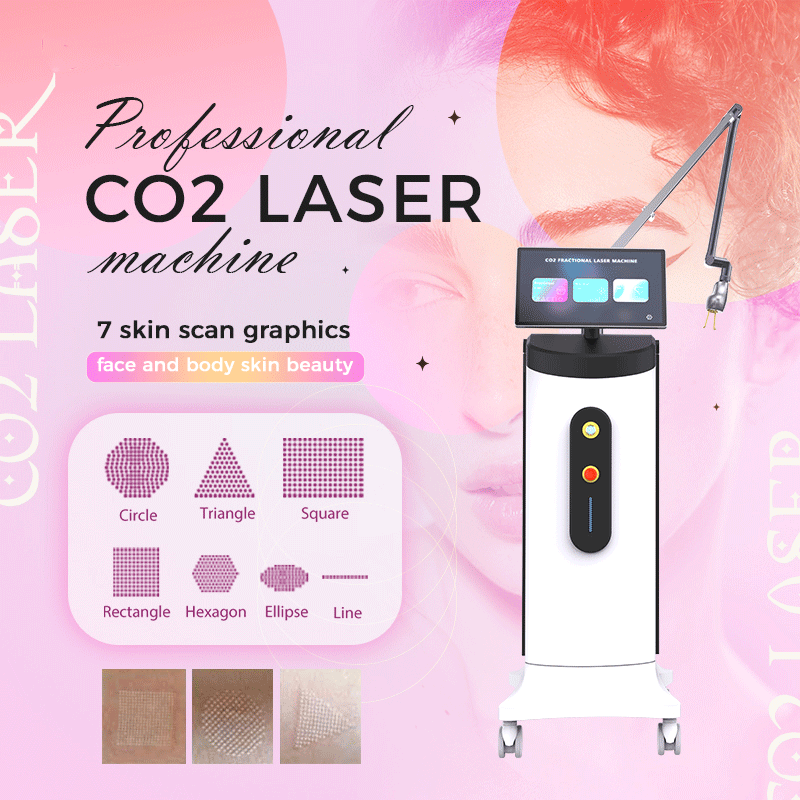
4. Anatomy of the NewAngie Fractional CO2 Laser Machine
5. How Fractional CO2 Laser Rejuvenates the Skin
6. Treatment Areas and Indications
7. Clinical Applications and Case Studies
8. Treatment Protocols for Different Skin Types
9. Safety Measures and Post-Treatment Care
10.Comparing Fractional CO2 Laser with Other Technologies
11. Maximizing Patient Comfort and Results
12. Business Benefits of Owning a Fractional CO2 Laser
13. Troubleshooting and Maintenance
14. Marketing Laser Treatments in a Competitive Market
Chapter 1: Understanding Fractional CO2 Laser Technology
Fractional CO2 laser technology represents one of the most advanced breakthroughs in the field of dermatology and aesthetic medicine. Its development has revolutionized the way we treat skin concerns such as wrinkles, acne scars, pigmentation, and texture irregularities. By combining precision engineering with biological understanding, this technology delivers visible rejuvenation while maintaining patient safety and comfort. In this chapter, we'll explore what makes the Fractional CO2 Laser so effective - from its underlying science to its clinical benefits and applications.
1.1 The Foundation of CO2 Laser Technology
The term CO2 laser refers to a carbon dioxide laser that emits light at a wavelength of 10,600 nanometers. This wavelength is particularly effective because it is strongly absorbed by water - the main component of human skin. When the laser energy interacts with skin tissue, it converts to heat, vaporizing microscopic layers of skin and triggering controlled thermal damage.
Traditional CO2 lasers were once the gold standard for skin resurfacing, but they had a major drawback: they were fully ablative. This means they removed the entire top layer of skin in one pass, leaving the skin raw and requiring long recovery periods. Although results were remarkable, side effects such as redness, infection, or even scarring limited their popularity.
The fractional CO2 laser changed everything by introducing a safer and more efficient approach - fractional photothermolysis.
1.2 What Does "Fractional" Mean?
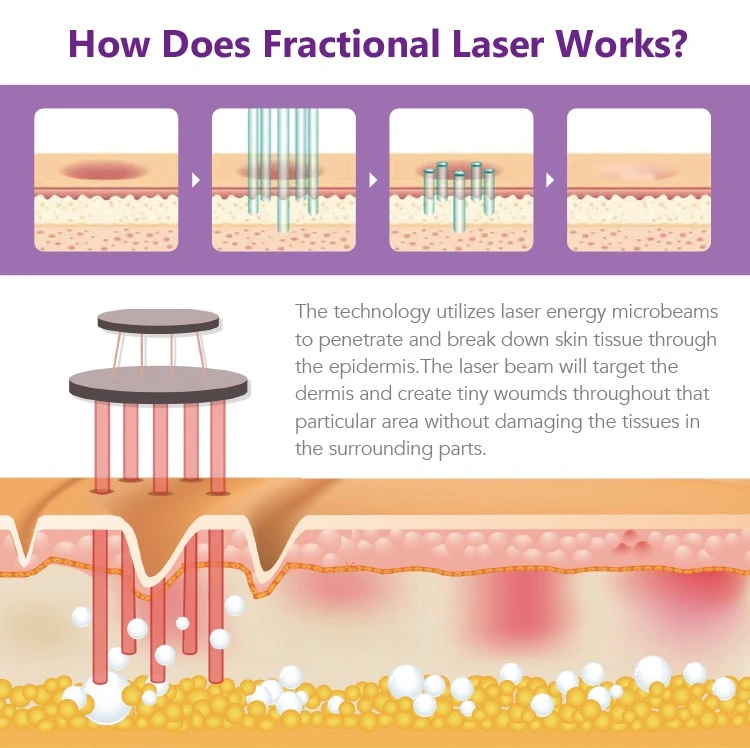
The term fractional means that the laser energy is delivered to only a fraction of the skin's surface at one time, rather than treating the entire area. The laser creates thousands of microscopic treatment zones (MTZs), which are essentially tiny columns of heat. These columns penetrate deeply into the skin while leaving surrounding tissue intact.
This fractional pattern allows for:
Faster healing, as the untreated skin helps regenerate the damaged zones.
Reduced risk, since not all of the skin is removed or heated.
Minimal downtime, making it a more patient-friendly treatment.
This method achieves comparable results to fully ablative resurfacing but with significantly less recovery time. Patients can typically return to normal activities in a few days rather than weeks.
1.3 How Fractional CO2 Laser Works
The NewAngie Fractional CO2 Laser Skin Resurfacing Machine works by directing a focused laser beam into the epidermis and dermis in a controlled and fractional manner. Here's a breakdown of the process:
Energy Delivery:
The laser emits microbeams of CO2 light energy, creating columns of controlled thermal injury.
Ablation and Coagulation:
The heat vaporizes damaged skin tissue (ablation) while stimulating collagen remodeling (coagulation).
Collagen Regeneration:
The body's natural healing response is activated. Fibroblasts produce new collagen and elastin fibers to replace the damaged ones.
Skin Renewal:
Over time, the treated skin becomes smoother, tighter, and more even in tone and texture.
This combination of ablation and stimulation is what makes fractional CO2 laser treatment both corrective and regenerative.
1.4 Key Benefits of Fractional CO2 Laser
The technology's ability to treat a wide range of skin issues while maintaining safety makes it one of the most versatile tools in aesthetic medicine. Some of the most notable benefits include:
1.4.1 Effective Skin Resurfacing
Fractional CO2 laser can significantly improve skin texture, reduce fine lines, and smooth out wrinkles. The resurfacing process removes damaged cells and promotes the growth of fresh, healthy skin.
1.4.2 Scar and Stretch Mark Reduction
The deep penetration of the laser stimulates collagen in the dermal layers, which helps remodel scar tissue - making acne scars, surgical scars, and stretch marks less visible.
1.4.3 Pigmentation and Sun Damage
The laser can lighten dark spots, melasma, and uneven pigmentation by targeting the damaged skin cells and promoting regeneration.
1.4.4 Tightening and Firming
By stimulating collagen synthesis, the treatment gradually improves skin elasticity and firmness, giving a naturally lifted and youthful appearance.
1.4.5 Controlled Healing and Minimal Downtime
Since only micro-portions of the skin are treated at a time, healing occurs faster, and the risk of complications is greatly reduced compared to traditional lasers.
1.5 The Science of Fractional Photothermolysis
The core mechanism behind fractional CO2 laser treatment is fractional photothermolysis, a concept introduced in dermatology to describe controlled micro-injury and regeneration.
Here's how it works in scientific terms:
Photothermolysis means using light (photo) to heat (thermo) and selectively destroy (lysis) targeted tissue.
The laser creates microscopic thermal zones (MTZs) where the energy heats the skin.
Each MTZ is surrounded by healthy tissue that assists in rapid repair.
During healing, the skin undergoes a biological remodeling process - forming new collagen, elastin, and capillaries.
This process is both safe and predictable, making it ideal for patients seeking significant improvement with low risk.
1.6 Parameters that Affect Treatment Results
The NewAngie Fractional CO2 Laser provides adjustable settings that allow practitioners to tailor treatments to individual skin types and concerns. Key adjustable parameters include:
Energy Density (mJ): Determines how much power is delivered per microbeam.
Spot Size: Controls the diameter of each laser microbeam, affecting penetration depth.
Pulse Duration: Adjusts how long each pulse of energy lasts, balancing ablation and coagulation.
Scan Pattern and Density: Defines the number and arrangement of MTZs per area, influencing the intensity and recovery time.
By fine-tuning these variables, practitioners can achieve customized results for anything from gentle skin rejuvenation to deep scar revision.
1.7 Comparing Fractional CO2 with Other Laser Technologies
There are various laser technologies in the market - including Er:YAG, Nd:YAG, Pico, and Diode lasers. While each has its own purpose, the Fractional CO2 Laser remains unmatched for skin resurfacing and collagen renewal due to its deeper thermal effect and long-term results.
| Laser Type | Primary Use | Penetration Depth | Downtime | Effectiveness for Resurfacing |
|---|---|---|---|---|
| CO2 (Fractional) | Wrinkles, Scars, Resurfacing | Deep | Moderate | ★★★★★ |
| Er:YAG | Superficial resurfacing | Shallow | Low | ★★★★☆ |
| Nd:YAG | Vascular, hair removal | Medium | Low | ★★★☆☆ |
| Pico | Pigmentation, tattoos | Variable | Very low | ★★★☆☆ |
The fractional CO2 laser provides the best balance between depth, control, and visible transformation, making it the top choice for professional skin resurfacing.
1.8 Why Choose NewAngie Fractional CO2 Laser
The NewAngie Fractional CO2 Laser Skin Resurfacing Machine stands out for its reliability, flexibility, and ease of operation. Key advantages include:
Intelligent Scanning System for even coverage.
Adjustable pulse energy for both fractional and traditional ablation modes.
Precision optical lens for stable energy output.
User-friendly interface with touchscreen control.
Advanced cooling and safety systems to protect the skin.
Durable construction ensuring long-term clinical performance.
These features make it suitable for both experienced dermatologists and new aesthetic practitioners looking to deliver professional-level treatments.
1.9 The Future of Fractional Laser Technology
As aesthetic technology continues to evolve, fractional CO2 lasers are integrating with digital enhancements such as AI-based skin recognition, automated calibration, and hybrid wavelengths that combine CO2 with other laser types for enhanced precision.
Future machines are expected to provide:
Faster treatment speeds
Shorter recovery periods
Enhanced comfort
Even higher collagen stimulation efficiency
The NewAngie system is designed to adapt to these trends, ensuring that clinics stay ahead in the competitive field of aesthetic innovation.
Chapter 2: The Science Behind Skin Resurfacing
Skin resurfacing is a fascinating intersection of biological regeneration and advanced technology. It's a process that goes beyond superficial correction-addressing the very foundation of the skin's structure to promote long-lasting rejuvenation. In the world of aesthetic medicine, fractional CO2 laser resurfacing stands as one of the most effective methods for restoring youthful, healthy skin. To truly understand its power, one must delve into the science of how skin renews itself, how lasers influence this process, and what biological mechanisms are triggered beneath the surface.
2.1 Understanding the Structure of the Skin
Before examining how laser resurfacing works, it's essential to understand the three main layers of the skin and their roles in maintaining texture, elasticity, and appearance.
Epidermis:
The outermost layer, composed mainly of keratinocytes, provides a protective barrier against environmental factors. It determines skin tone, texture, and brightness.
Dermis:
The middle layer houses collagen, elastin fibers, and fibroblasts. These structural proteins give the skin its firmness, flexibility, and resilience. Most aging and scarring occur here due to collagen degradation over time.
Hypodermis (Subcutaneous Layer):
This deeper layer contains fat and connective tissue, providing insulation and contour to the skin.
Skin aging, sun exposure, and injury all affect these layers. Over time, collagen and elastin break down, leading to fine lines, sagging, and uneven tone. Traditional cosmetic treatments can only reach the epidermis, offering temporary improvement. Fractional CO2 lasers, however, penetrate deeper, stimulating the dermis to trigger the body's natural repair system.
2.2 The Concept of Controlled Injury and Healing
Skin resurfacing is based on a simple yet powerful biological principle: controlled damage leads to regeneration. When the skin experiences minor injury, it naturally activates a healing cascade that produces new cells and collagen to replace damaged tissue.
Fractional CO2 laser resurfacing applies this concept with scientific precision:
The laser creates microscopic thermal columns (micro-injuries) within the skin.
These columns stimulate the body's wound-healing mechanisms.
New, healthy skin replaces old, damaged cells without scarring.
Unlike deep surgical interventions, the process is precisely calibrated. The surrounding untreated skin accelerates healing, minimizing downtime and risk.
This process is known as fractional photothermolysis, where "photo" means light, "thermo" means heat, and "lysis" means controlled destruction. The laser energy targets specific skin structures without harming adjacent tissues.
2.3 The Role of Collagen in Skin Rejuvenation
Collagen is the most abundant protein in the human body and the key to youthful-looking skin. It provides structural support, elasticity, and hydration. Unfortunately, after the age of 25, collagen production begins to decline, leading to visible signs of aging such as wrinkles and loss of firmness.
The NewAngie Fractional CO2 Laser Skin Resurfacing Machine addresses this by stimulating neocollagenesis-the formation of new collagen fibers. Here's how it happens:
Thermal Activation:
The laser's heat energy penetrates the dermal layer, causing controlled damage to collagen fibers.
Fibroblast Stimulation:
The body responds by activating fibroblasts-specialized cells responsible for producing new collagen and elastin.
Collagen Remodeling:
Over several weeks, new collagen replaces old, damaged fibers, improving skin elasticity and reducing wrinkles.
Continued Regeneration:
The process continues for up to six months post-treatment, leading to progressive and long-lasting results.
This biological renewal is what sets fractional CO2 resurfacing apart from superficial skin treatments.
2.4 The Laser-Skin Interaction
When laser light interacts with skin tissue, three key physical phenomena occur:
Absorption:
The CO2 laser wavelength (10,600 nm) is highly absorbed by water molecules in the skin. Since water is abundant in all skin layers, the laser energy is efficiently transformed into heat.
Ablation:
This heat vaporizes microscopic columns of skin, removing damaged tissue and surface irregularities.
Coagulation:
The heat also denatures collagen in the surrounding area, triggering an inflammatory response that leads to tissue tightening and regeneration.
These three processes-absorption, ablation, and coagulation-work together to resurface the skin, remove imperfections, and stimulate deeper healing.
2.5 Fractional vs. Ablative Skin Resurfacing
To understand why fractional technology is superior, it's helpful to compare it with traditional ablative methods.
| Feature | Traditional CO2 Laser (Fully Ablative) | Fractional CO2 Laser |
|---|---|---|
| Treatment Coverage | 100% of surface area | Micro-zones (fractional coverage) |
| Healing Time | 2–4 weeks | 3–7 days |
| Risk of Complications | High | Low |
| Patient Comfort | Moderate discomfort | Mild discomfort |
| Effectiveness | Very high | High to very high |
| Downtime | Long | Short |
Fractional technology delivers the same regenerative benefits as traditional CO2 lasers but with reduced recovery time and lower risk. This is achieved because untreated skin between laser columns assists in rapid healing and protects against infection or hyperpigmentation.
2.6 Biological Stages of Healing After Laser Resurfacing
After fractional CO2 treatment, the skin goes through several distinct biological stages of healing:
Inflammation Phase (Days 1–3):
The body recognizes microscopic injury, triggering an immune response. Blood flow increases, and white blood cells remove damaged tissue.
Proliferation Phase (Days 3–10):
Fibroblasts begin producing new collagen and elastin fibers. The epidermis starts regenerating, and microcrusts form on the treated surface.
Remodeling Phase (Weeks 2–8):
New collagen matures, replacing damaged fibers. The skin becomes smoother, tighter, and more radiant.
Long-Term Regeneration (Months 2–6):
Continuous collagen production and cell turnover lead to ongoing improvement. The skin tone evens out, and texture continues to refine.
This gradual transformation ensures natural, long-lasting results without drastic or artificial changes.
2.7 Factors That Influence Skin Resurfacing Results
While the NewAngie Fractional CO2 Laser offers precise control, outcomes can vary based on several physiological and technical factors:
Patient's Skin Type: Darker skin tones require conservative settings to minimize pigmentation risks.
Age and Collagen Quality: Younger skin typically responds faster to collagen stimulation.
Laser Parameters: Energy density, pulse duration, and treatment depth determine the intensity of resurfacing.
Aftercare Compliance: Proper post-treatment care (hydration, sun protection, and topical repair creams) ensures optimal healing.
Lifestyle Factors: Smoking, poor diet, and UV exposure can slow collagen regeneration.
Experienced practitioners can fine-tune parameters to match each patient's individual profile, maximizing both safety and effectiveness.
2.8 Cellular and Molecular Mechanisms
At a microscopic level, fractional CO2 laser resurfacing triggers several key biological responses:
Heat Shock Proteins (HSPs):
These protective proteins are activated in response to thermal stress, enhancing cellular resilience and aiding in tissue repair.
Cytokine Release:
Growth factors like TGF-β (Transforming Growth Factor Beta) and VEGF (Vascular Endothelial Growth Factor) are released, promoting cell growth, angiogenesis, and collagen synthesis.
Matrix Remodeling:
Enzymes such as matrix metalloproteinases (MMPs) break down damaged collagen fibers, paving the way for new structural protein formation.
Neoangiogenesis:
New capillaries form in the treated area, improving oxygen and nutrient delivery, which accelerates healing and enhances skin tone.
These molecular changes collectively rejuvenate the skin from the inside out, creating visible and measurable improvements in firmness, texture, and color uniformity.
2.9 The Role of the NewAngie Fractional CO2 Laser in Clinical Practice
The NewAngie Fractional CO2 Laser Skin Resurfacing Machine applies this biological science through intelligent engineering. Its smart scanning system, customizable energy output, and advanced cooling mechanisms allow practitioners to achieve consistent, predictable results.
Fractional Ablation Mode focuses on resurfacing and wrinkle reduction.
Deep Coagulation Mode targets acne scars, stretch marks, and skin laxity.
Hybrid Mode can combine both effects for comprehensive skin rejuvenation.
This flexibility ensures that practitioners can safely treat a wide range of skin conditions with personalized precision.
Chapter 3: Evolution of Aesthetic Laser Treatments
The evolution of aesthetic laser treatments has transformed skincare over the past six decades. The journey began in 1960 with the invention of the ruby laser, marking the start of medical laser applications. Early CO2 lasers in the 1970s offered precise tissue removal but involved long recovery times. In the 1980s, the concept of selective photothermolysis allowed lasers to target specific skin components like water or melanin, greatly improving safety and precision.
During the 1990s, CO2 and Er:YAG lasers dominated skin resurfacing, treating wrinkles and scars with better control. However, downtime and side effects remained concerns. The real breakthrough came in the 2000s with fractional laser technology, which treated skin in microscopic zones, promoting faster healing and reduced risks.
Today's fractional CO2 lasers, such as those by NewAngie, represent the pinnacle of this evolution-combining deep collagen stimulation, precise energy control, and minimal downtime. This progression reflects a shift from aggressive, invasive resurfacing to smart, patient-friendly rejuvenation, setting new standards for modern aesthetic care.
Chapter 4:Anatomy of the NewAngie Fractional CO2 Laser Machine
The NewAngie Fractional CO2 Laser Machine is designed with advanced engineering and precision to deliver safe, effective, and customizable treatments. Understanding its anatomy helps practitioners appreciate how each component contributes to superior performance and consistent results.
1. Laser Source
At the heart of the machine is the CO2 laser emitter, which operates at a wavelength of 10,600 nm. This wavelength is ideal for targeting water in the skin tissue, allowing controlled ablation and thermal stimulation. The laser source ensures a stable energy output, essential for uniform treatment results and patient safety.
2. Fractional Scanner System
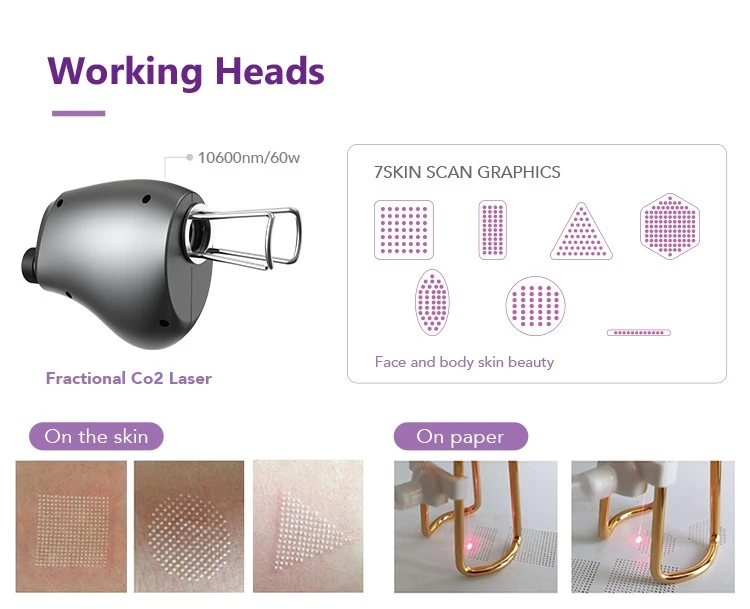
The scanner handpiece divides the laser beam into hundreds of microbeams, creating microthermal zones (MTZs) on the skin's surface. These microscopic treatment points leave surrounding tissue intact, speeding up the healing process. The scanner's precision ensures even energy delivery across the treatment area.
3. Touchscreen Control Panel
The intelligent control interface allows easy adjustment of key parameters such as energy level, density, pulse duration, and scan mode. The touchscreen design simplifies operation, helping practitioners customize treatments for different skin types and conditions with accuracy.
4. Adjustable Handpieces
The machine is equipped with multiple handpiece options for various treatment needs - including fractional, surgical, and gynecological applications. Each handpiece is ergonomically designed for comfort and precise targeting, ensuring effective results with minimal strain on the operator.
5. Cooling and Ventilation System
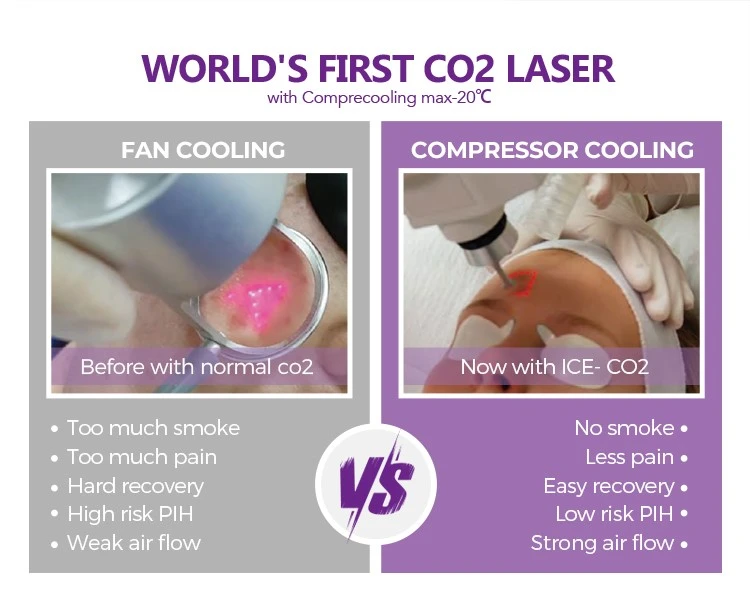
NewAngie integrates an efficient air cooling system to stabilize laser temperature and protect the internal components during long operation periods. This system minimizes overheating risks and extends the device's lifespan.
6. Articulated Arm
The seven-joint articulated arm provides flexibility and precision. It allows smooth, stable movement during treatment, ensuring the laser beam maintains accuracy even when reaching difficult angles or small treatment areas.
7. Safety Mechanisms
Safety is built into every part of the NewAngie design. Features include emergency stop controls, automatic energy calibration, and skin contact sensors that prevent excessive exposure. These ensure the treatment remains both effective and secure for the patient.
8. Power Supply and System Stability
The machine uses a high-efficiency power supply unit, maintaining consistent performance even during long treatment sessions. Its internal architecture reduces electrical fluctuations and ensures stable laser output for precise energy control.
Chapter 5. How Fractional CO2 Laser Rejuvenates the Skin
The fractional CO2 laser rejuvenates skin through controlled micro-injury, stimulating the body's natural healing mechanisms. Microthermal zones created by the laser penetrate the epidermis and dermis, removing damaged cells and triggering collagen and elastin production. Over several weeks, new skin tissue forms, improving texture, tone, and elasticity. Fine lines, wrinkles, acne scars, and pigmentation are gradually reduced as the skin undergoes collagen remodeling and epidermal regeneration. Fractional technology ensures that only a fraction of the skin is treated at a time, leaving surrounding areas intact for faster recovery, while long-term rejuvenation continues for months after treatment.
Chapter 6. Treatment Areas and Indications
Fractional CO2 lasers are highly versatile and can treat multiple areas of the body:
Face: Wrinkles, fine lines, acne scars, pigmentation, uneven skin texture, enlarged pores
Neck and décolletage: Signs of aging, sun damage, and laxity
Hands: Age spots, wrinkles, and rough texture
Body: Stretch marks, surgical scars, and skin laxity
Intimate areas: Vaginal rejuvenation and tightening
Indications include photoaging, acne and surgical scars, pigmentation disorders, uneven texture, enlarged pores, and mild to moderate skin laxity. The versatility of the NewAngie system allows tailored treatments for each condition.
Chapter 7. Clinical Applications and Case Studies
Clinical studies and case reports demonstrate the efficacy of fractional CO2 laser resurfacing:
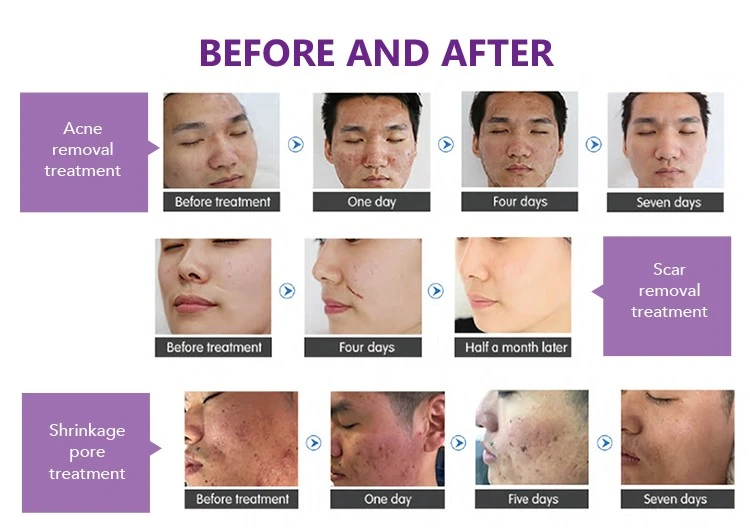
Acne Scar Improvement: Patients show a 60–80% reduction in scar depth after 2–3 sessions.
Wrinkle Reduction: Fine lines around the eyes and mouth improve significantly with 1–2 treatments.
Pigmentation and Sun Damage: Sunspots and age spots lighten gradually, with overall skin tone becoming more even.
Stretch Marks: Body stretch marks show noticeable flattening and texture improvement after 3–4 treatments.
Case studies highlight predictable outcomes, high patient satisfaction, and minimal downtime when using the NewAngie fractional CO2 laser.
Chapter 8. Treatment Protocols for Different Skin Types
Skin type, classified by the Fitzpatrick scale, determines laser settings and treatment frequency:
Type I–III (Fair to Medium): Can tolerate higher energy settings; recovery is generally quick.
Type IV–VI (Medium to Dark): Requires lower energy and longer intervals between sessions to reduce risks of hyperpigmentation.
Other factors like age, skin condition, scar depth, and treatment area are considered. Proper assessment ensures safe and effective rejuvenation, with customized density, pulse duration, and spot size for each patient.
Chapter 9. Safety Measures and Post-Treatment Care
Safety is critical with CO2 laser treatments:
Pre-Treatment: Skin assessment, patch testing, and avoiding sun exposure or retinoids for 1–2 weeks.
During Treatment: Eye protection, controlled energy settings, and real-time monitoring.
Post-Treatment Care: Moisturizers, sunscreen, and avoidance of harsh chemicals or exfoliation. Recovery usually takes 3–7 days, with redness and mild swelling being common.
Following these measures minimizes complications such as infection, hyperpigmentation, and prolonged redness.
Chapter 10. Comparing Fractional CO2 Laser with Other Technologies
| Technology | Primary Use | Downtime | Effectiveness | Safety |
|---|---|---|---|---|
| Fractional CO2 | Skin resurfacing, scars, wrinkles | Short (3–7 days) | High | High |
| Er:YAG | Superficial resurfacing | Very short | Moderate | High |
| Nd:YAG | Pigmentation, vascular lesions | Minimal | Moderate | High |
| Pico Laser | Tattoo removal, pigmentation | Minimal | Moderate | High |
Fractional CO2 remains the gold standard for skin rejuvenation due to deep collagen stimulation, versatility, and predictable results, while other lasers may serve specific or adjunct purposes.
Chapter 11. Maximizing Patient Comfort and Results
Patient comfort can be enhanced with:
Topical anesthetics prior to treatment
Integrated cooling systems during procedures
Shorter treatment passes with multiple sessions
Post-treatment pain relief and gentle skincare
Results can be optimized by personalizing laser parameters, performing multiple sessions, and combining treatments with PRP, microneedling, or topical agents to accelerate healing and enhance collagen production.
Chapter 12. Business Benefits of Owning a Fractional CO2 Laser
Owning a NewAngie fractional CO2 laser provides significant business advantages:
Expanded Service Portfolio: Treat wrinkles, scars, pigmentation, and more
High ROI: Single machine can generate multiple revenue streams
Patient Retention: Visible, long-lasting results increase loyalty
Competitive Edge: Fractional CO2 laser treatments are in high demand in aesthetic clinics
Versatility: Multi-functional machine allows treatment of various body areas
Clinics can attract a broad demographic seeking non-surgical rejuvenation.
Chapter 13. Troubleshooting and Maintenance
Regular maintenance ensures long-term performance:
Daily Checks: Inspect handpieces, cables, and cooling vents.
Calibration: Verify laser output and energy levels before each session.
Cleaning: Sterilize handpieces and clean the scanner lens.
Troubleshooting Common Issues:
Irregular energy output → check connections and calibration
Overheating → ensure proper cooling and ventilation
Handpiece misalignment → realign scanner and lens
Following manufacturer guidelines reduces downtime and prolongs machine lifespan.
Chapter 14. Marketing Laser Treatments in a Competitive Market
Effective marketing strategies include:
Highlighting Results: Showcase before-and-after images on social media and websites
Patient Education: Explain science and benefits of fractional CO2 laser
Promotions and Packages: Offer bundled treatments for multiple sessions
Targeted Advertising: Focus on individuals with acne scars, pigmentation, or signs of aging
Referral Programs: Encourage existing patients to recommend treatments
Positioning fractional CO2 laser treatments as safe, effective, and versatile differentiates a clinic in a competitive aesthetic market.
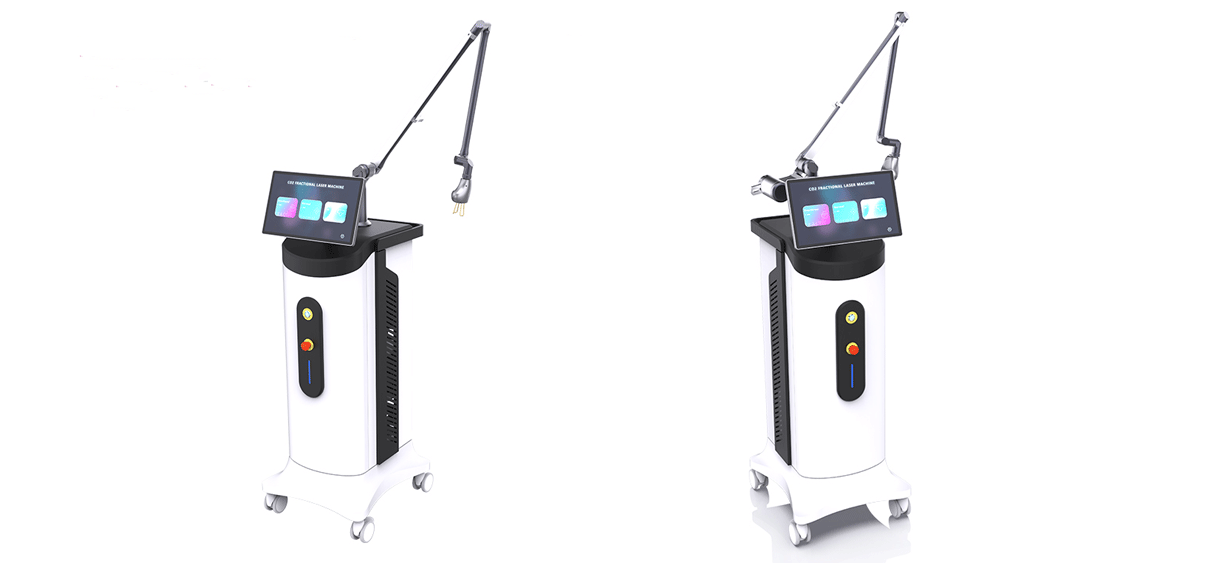
NewAngie Fractional CO2 Laser Machine brings this technology to life with precision engineering, intuitive controls, and unmatched treatment flexibility. By understanding the science, mechanics, and clinical applications of this technology, practitioners can provide their clients with exceptional results - redefining what's possible in modern skin rejuvenation.


