


The Rising Popularity of Non-Surgical Fat Reduction
The global demand for body sculpting solutions has been steadily increasing, particularly among people who struggle with areas of fat that are resistant to diet and exercise. According to a report by the American Society for Dermatologic Surgery, non-invasive fat reduction procedures have risen by more than 60% over the last decade. Consumers are increasingly seeking treatments that are safe, require little to no downtime, and deliver visible results.
Cryo Slimming fits squarely into this demand. Clinics and wellness centers across the United States, Europe, and Asia now list it as one of their top services, while influencers on social media showcase "before-and-after" images that seem to promise dramatic results. Yet, beyond the marketing, what does the science say?
Understanding the Technology Behind Cryo Slimming
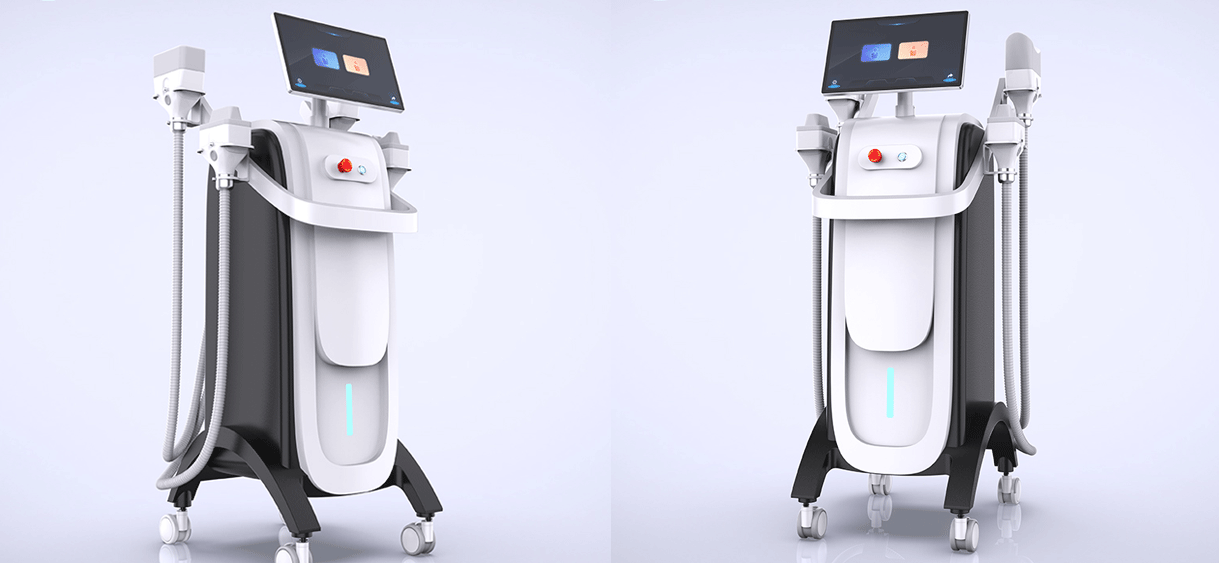
Cryo Slimming is based on the principle of cryolipolysis, a technology first discovered by Harvard scientists who noticed that fat cells are more sensitive to cold than other types of tissue. By applying controlled cooling to a targeted area, the fat cells crystallize and die, while surrounding skin, muscles, and nerves remain unharmed. Over the following weeks, the body naturally eliminates these dead fat cells through its lymphatic system.
A Cryo Slimming session usually lasts between 30 to 60 minutes, depending on the treated area. Common treatment zones include the abdomen, thighs, arms, back, and chin. The procedure is generally well-tolerated, with most patients reporting only mild discomfort, such as temporary numbness, redness, or tingling.
What the Research Says
Several peer-reviewed studies support the effectiveness of cryolipolysis. Clinical data show an average fat reduction of 10% to 25% in treated areas after one session. Most patients notice visible changes within three weeks, with maximum results appearing after two to three months.
However, Cryo Slimming is not a weight-loss solution. Experts emphasize that it is designed for body contouring, not for treating obesity. Patients who are already close to their ideal weight but struggle with stubborn fat pockets tend to see the best results.
A systematic review published in the Journal of Clinical, Cosmetic and Investigational Dermatology concluded that cryolipolysis is both safe and effective for localized fat reduction, with a high level of patient satisfaction. Nevertheless, the study also noted that outcomes can vary significantly depending on the provider, the device used, and the patient's lifestyle after treatment.
Real-World Results and Patient Experiences
Outside of clinical studies, patient reviews paint a more nuanced picture. On forums and social media platforms, some users report "life-changing" results, claiming inches lost around the waistline and improved body confidence. Others, however, describe modest or even disappointing changes, sometimes noting that the treated area feels different but looks only slightly slimmer.
For instance, one patient in New York described losing nearly two inches around her abdomen after three sessions, saying it gave her "the jumpstart I needed to stay motivated with diet and exercise." Another, in Los Angeles, expressed frustration after four treatments, stating, "I felt some difference in my jeans, but visually it wasn't the dramatic result I expected."
This variability underscores the importance of managing expectations. Cryo Slimming can enhance body shape, but it is not equivalent to surgical liposuction, which typically removes a much larger volume of fat in one procedure.
Safety and Potential Side Effects
Cryo Slimming is generally considered safe, with most side effects being temporary and mild. These may include bruising, swelling, numbness, or sensitivity in the treated area. Symptoms usually resolve within a few days to weeks.
However, there is a rare but serious complication known as Paradoxical Adipose Hyperplasia (PAH), in which fat cells in the treated area enlarge rather than shrink. This occurs in fewer than 1% of patients but may require surgical intervention to correct. While uncommon, the risk has sparked debate among medical professionals about whether the treatment should be performed only by trained clinicians rather than in spas or beauty salons.
Comparing Cryo Slimming with Other Fat Reduction Methods
Cryo Slimming is one of several non-invasive body contouring techniques. Others include:
Radiofrequency (RF) treatments, which use heat to break down fat cells and tighten skin.
High-Intensity Focused Ultrasound (HIFU), which destroys fat cells through ultrasound energy.
Laser lipolysis, which uses laser energy to liquefy fat cells before they are naturally metabolized.
Each method has its own advantages and limitations. For example, RF treatments may also stimulate collagen production, improving skin tightness, while cryolipolysis is particularly effective at treating well-defined fat bulges.
For patients seeking dramatic and immediate results, surgical liposuction remains the gold standard. However, it requires anesthesia, recovery time, and carries greater risks. Cryo Slimming offers a middle ground: modest but noticeable results with minimal risk and no downtime.
The Role of Lifestyle in Long-Term Success
Experts stress that maintaining results depends heavily on lifestyle. Cryo Slimming removes treated fat cells permanently, but it does not prevent new fat from accumulating in remaining cells. Patients who return to unhealthy eating or sedentary habits may see their results diminish over time.
Nutritionists and fitness trainers often advise combining Cryo Slimming with a balanced diet and regular exercise to maximize benefits. In fact, some clinics now offer bundled wellness programs that include dietary counseling, fitness plans, and cryo treatments to encourage holistic results.
Market Trends and Consumer Demand
The cryo-based slimming industry continues to expand worldwide. In Asia, particularly China and South Korea, aesthetic clinics report growing demand from young professionals and middle-aged clients alike. In the United States and Europe, Cryo Slimming is marketed both as a standalone treatment and as part of wellness spa packages.
Analysts predict continued growth in this sector as devices become more advanced, treatments become faster, and costs gradually decrease. Still, consumer advocacy groups caution that marketing claims often exaggerate results, and patients should always consult with qualified providers before making decisions.
Expert Opinions: Is It Worth It?
Dr. Angela Miller, a board-certified dermatologist in Chicago, summarizes the current consensus:
"Cryo Slimming works, but expectations need to be realistic. Patients can expect a 20% reduction in fat in treated areas at best, which is noticeable but not dramatic. It is a great option for someone close to their goal weight who wants refinement, not a total body makeover."
Similarly, wellness consultant James Liu adds:
"What people need to understand is that Cryo Slimming is a tool, not a miracle. If you combine it with healthy lifestyle habits, it can be effective. If you expect it to replace diet and exercise, you will likely be disappointed."
Conclusion: Does Cryo Slimming Really Work?
The answer is yes-but with caveats. Cryo Slimming does reduce fat in targeted areas, supported by both scientific studies and patient experiences. The results are modest but real, especially for individuals already close to their desired body weight. It is not a substitute for weight loss, nor is it a magic bullet for body transformation. Instead, it is best viewed as a contouring tool that can provide an extra boost in achieving a more sculpted silhouette.
For those considering the treatment, the keys to success are choosing a reputable provider, understanding the limitations, and maintaining a healthy lifestyle. As with many wellness innovations, the truth lies somewhere between the hype and the skepticism: Cryo Slimming works, but only when used wisely and with the right expectations.


