


Scar revision has always been one of the most challenging areas in aesthetic dermatology. Whether scars are caused by acne, trauma, surgery, or burns, the irregularities they leave on the skin can affect texture, elasticity, and patient confidence for years. Over the past decade, numerous techniques have been developed to address these concerns, but few have evolved as rapidly and as effectively as fractional CO₂ laser technology.
Understanding the Basics: Why CO₂ Lasers Are So Effective for Scars
Fractional CO₂ lasers operate at a wavelength of 10,600 nm, a range strongly absorbed by water - the primary component of skin. When the laser energy contacts the skin, it precisely vaporizes microcolumns of tissue, creating what are called microthermal zones (MTZs). Surrounding untreated areas accelerate healing, stimulating new collagen, elastin, and extracellular matrix remodeling.
What makes the CO₂ laser unique compared with non-ablative technologies is the dual effect of ablation and coagulation. This combination delivers deeper remodeling with fewer sessions, particularly important for stubborn scars that lie deep in the dermis.
Breakthrough #1: Ultra-Refined Pulse Control and Smart Energy Delivery
One of the most significant technological leaps in the last few years is the development of variable pulse modulation systems. Earlier-generation CO₂ systems provided consistent energy output but lacked precision in controlling heat spread. Newer models now allow clinicians to balance:
Peak power
Pulse duration
Thermal containment
Depth of ablation
This control results in higher efficacy with reduced collateral damage. For patients, this means:
Less post-treatment redness
Shorter downtime
A lower risk of pigment alteration in darker skin types
Manufacturers have also introduced intelligent energy algorithms that automatically adjust power based on skin contact, hydration levels, and density settings. This minimizes user error and creates consistent clinical outcomes, even on irregular scar surfaces.
Breakthrough #2: Advanced Fractional Scanning Patterns for Customized Results
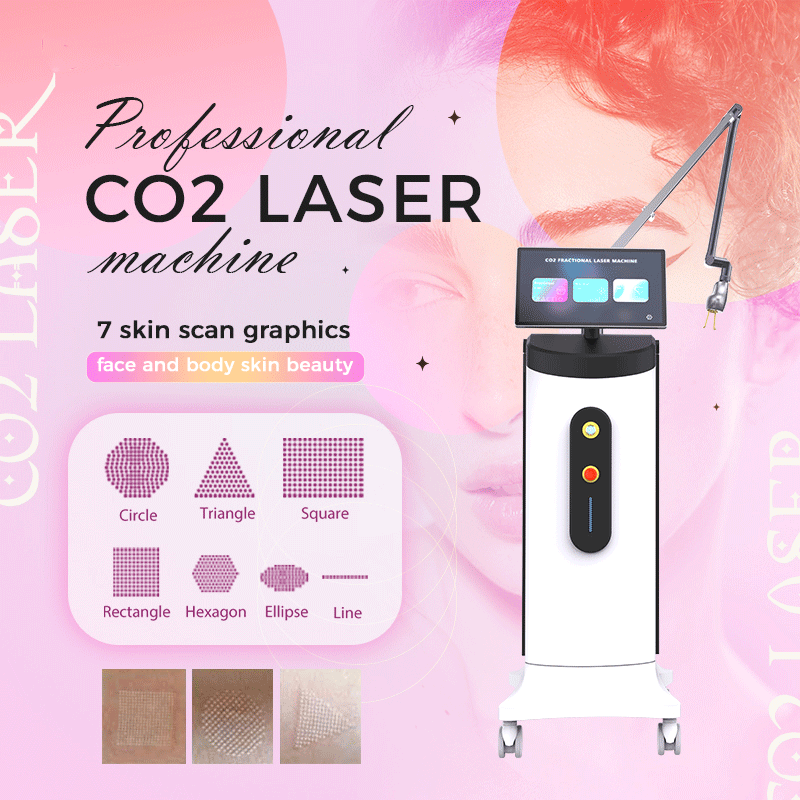
Traditional CO₂ fractional patterns were limited to fixed-grid scanning, which, although effective, sometimes caused overtreatment of certain regions and undertreatment of others. Today's scanners are far more advanced.
Dynamic, Non-linear Patterns
New scanning technology offers:
Spiral patterns
Randomized fractional placement
Adjustable density zones
Dual-pass mapping
These allow dermatologists to target different scar depths in a single session. For example, hypertrophic scars may require shallow vaporization, while deep atrophic scars benefit from deeper microchannels. With the latest scanners, both can be addressed simultaneously without increasing thermal stress.
Improved Handpiece Ergonomics
Modern articulated arms and lightweight handpieces allow smoother, more accurate movement across facial contours. This is particularly important around delicate areas such as:
Perioral wrinkles
Cheeks with rolling scars
Temple depressions
Surgical linear scars
The result is more precise treatment and reduced variability between sessions.
Breakthrough #3: Combined Coagulation Modes Enhancing Collagen Remodeling
The evolution of mixed-mode technology - combining ablative and coagulative energy modes - has greatly improved scar outcomes.
What mixed-mode means
Ablation clears damaged tissue and physically reduces raised scars.
Coagulative heating stimulates fibroblasts, increases dermal thickness, and smooths depressions.
This layered approach encourages more robust collagen remodeling, especially beneficial for:
Acne pitting
Burn contractures
Surgical scar stiffness
Long-standing ice-pick scars (when combined with other techniques)
By fine-tuning the ratio of ablation to coagulation, clinicians can achieve smoother, more even results that were previously difficult with standard CO₂ settings.
Breakthrough #4: Multi-Platform Combinations - A New Era of Synergistic Therapy
The industry's most exciting developments come from pairing fractional CO₂ lasers with complementary therapeutic methods. Instead of relying on the laser alone, clinicians now use combination therapy to accelerate healing, reduce inflammation, and enhance results.
(1) CO₂ + PRP (Platelet-Rich Plasma)
PRP delivers high concentrations of growth factors that:
Promote faster epithelial regeneration
Reduce downtime
Improve color and texture restoration
When applied post-CO₂ treatment, PRP penetrates microchannels created by the laser, maximizing absorption and accelerating recovery.
(2) CO₂ + Microneedling RF
Some clinics alternate fractional CO₂ with radiofrequency microneedling sessions.
RF microneedling focuses on deep collagen tightening, while CO₂ targets surface texture and scar boundaries. This dual strategy helps in:
Severe acne scarring
Mixed textural irregularities
Large pore reduction combined with scar revision
(3) CO₂ + Growth Factor Serums
High-grade bioactive serums are now formulated specifically for post-laser application. These serums enhance:
ECM renewal
Wound hydration
TGF-β modulation for smoother remodeling
(4) CO₂ + Subcision for Tethered Scars
Subcision releases fibrotic bands under rolling or anchored scars. Following this with CO₂ resurfacing helps the skin regenerate more evenly.
This combined approach produces visibly better results than relying on a single treatment modality.
Breakthrough #5: Safer Treatment Options for Darker Skin Types
Historically, fractional CO₂ lasers were considered risky for Fitzpatrick IV–VI skin types due to the risk of post-inflammatory hyperpigmentation (PIH). However, new advancements have made treatments safer and more accessible:
Lower-density and lower-energy presets
Ultra-short pulses reducing thermal spread
Cooling systems integrated into handpieces
Updated post-care protocols focusing on hydration and barrier repair
Some devices now include pre-treatment melanin assessment, allowing the software to recommend safer parameter ranges. This makes fractional CO₂ scar treatment possible for a broader population.
Breakthrough #6: Faster Healing Through Advanced Post-Care Science
Modern aftercare is no longer limited to creams and sunscreen. The most successful post-CO₂ recovery systems involve:
Hydrogel dressings
These provide instant cooling and hydration, reducing crusting and redness.
Bio-cellulose masks
Act as a healing matrix, soothing the skin and reducing transepidermal water loss (TEWL).
LED Red Light Therapy
Used within 48 hours post-treatment to decrease inflammation, improve blood flow, and support collagen production.
Peptide-infused creams
Help accelerate dermal repair and improve elasticity.
These improvements have not only shortened healing time but also decreased complication rates compared with earlier generations of post-care.
Breakthrough #7: Predictive Imaging Systems for Treatment Planning
One of the most futuristic developments is the integration of AI skin analysis into CO₂ laser consoles.
These systems can:
Predict scar topography
Map treatment depth
Measure collagen density
Track healing progress after each session
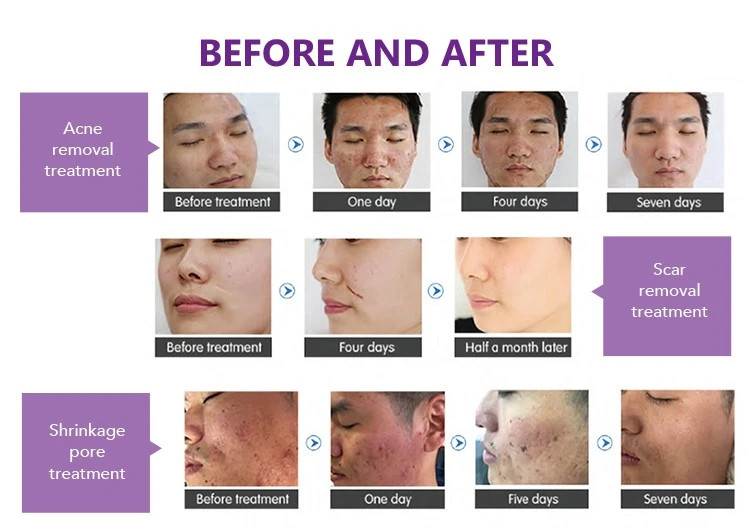
Clinicians can now show patients detailed before-and-after metrics through imaging tools that analyze:
Scar height
Surface texture
Pigmentation changes
Tissue density increases
This boosts patient confidence and improves treatment customization.
Clinical Impact: What Patients Can Expect from Modern CO₂ Scar Treatment
With the latest advancements, patients now experience:
1. More noticeable results with fewer sessions
Most patients see significant improvement in 2–3 sessions, whereas older systems required 5 or more.
2. A more comfortable treatment experience
Thanks to refined pulse modes and cooling interfaces, discomfort has decreased considerably.
3. Reduced downtime
Typical healing now ranges from 4–6 days, compared with 7–14 days a decade ago.
4. Better outcomes for difficult scars
Especially those involving:
Deep acne pits
Keloid-prone skin (with careful protocol)
Post-surgical widened scars
Burn contractures
5. Long-term remodeling
CO₂ laser benefits continue to improve over 3–6 months as collagen rebuilds.
The Future of Fractional CO₂ Laser Technology
Manufacturers and research institutes are currently exploring:
Hybrid CO₂ + Er:YAG systems
Cold ablation technologies
Smart AI-guided presets for scar typing
Near-painless CO₂ delivery systems
With continuous innovation, fractional CO₂ lasers will likely remain a gold-standard modality for scar reduction, blending engineering precision with biologic healing.
Fractional CO₂ laser technology has entered a transformative stage. Enhanced energy control, multi-mode scanning patterns, safer protocols for all skin types, and powerful synergistic combinations have revolutionized the treatment of scars - making procedures faster, safer, and more predictable than ever.
For clinics, these breakthroughs translate into higher patient satisfaction and expanded service capabilities.
For patients, they offer renewed hope through smoother texture, reduced scar visibility, and improved confidence.


